Why I’m Adding a CGM to My Health Toolbox

on Aug 24, 2026
This post may contain affiliate links. Please see our disclosure policy for more details.
If there’s one thing I’ve learned after years of coaching women through fat loss, it’s this:
There is no single tool that works for everyone.
Macro counting is an extremely effective tool. Strength training is an effective tool. Walking is a tool. GLP-1 medications have been an effective tool for many people. Hormone replacement therapy can be an incredibly helpful tool when appropriate. Blood work is a tool.
And lately, I’ve been really intrigued by another one:
A continuous glucose monitor, or CGM.
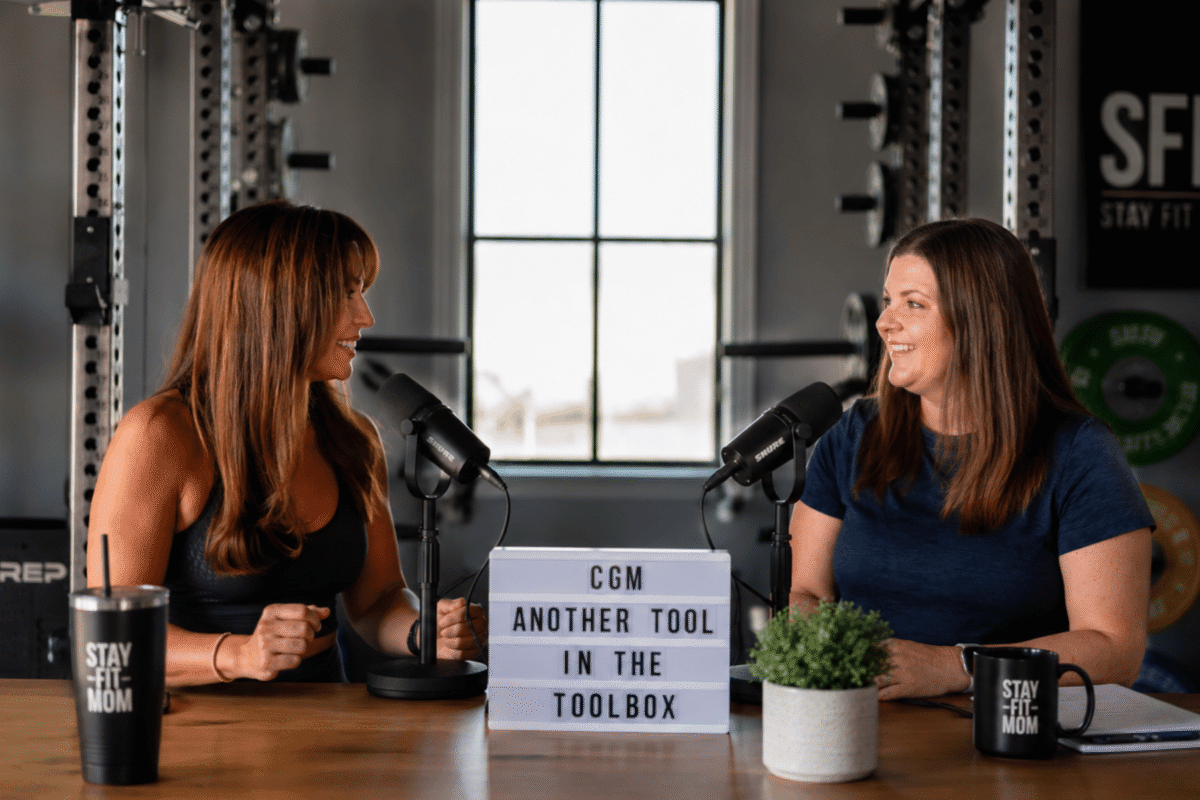
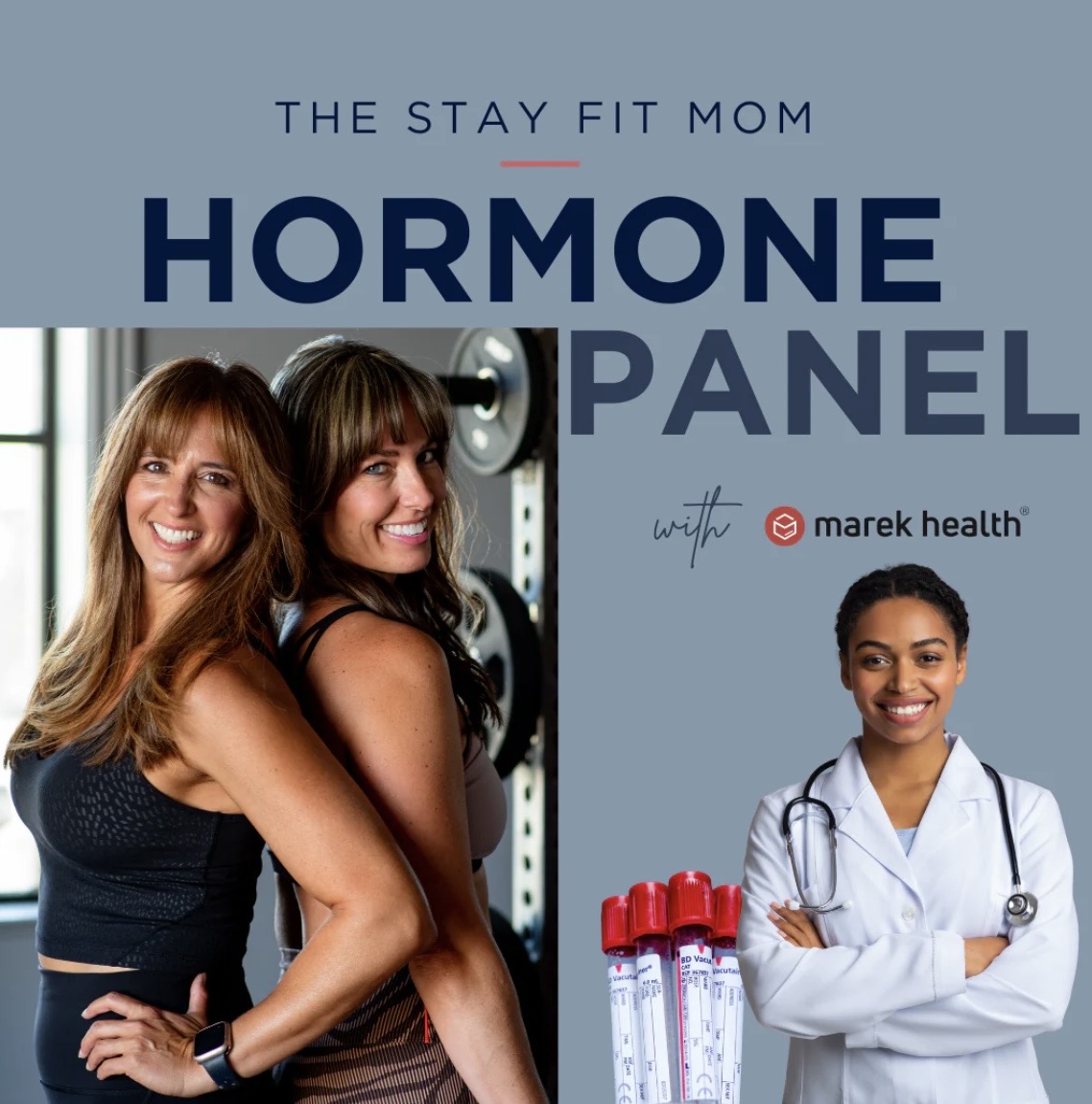
I recently sat down with our registered dietitian, Coach Emily, on The Stay Fit Mom Podcast to talk about her experience wearing a CGM for the last seven months. And after hearing what she learned about her own body—and seeing the results she’s had—I decided I want to try one for myself.
Not because I think a CGM is some magical fat-loss device.
But because data is a tool.
And if there’s one theme that has defined this year for me, it’s learning more about my own body.
Check out Coach Emily’s transformation here:
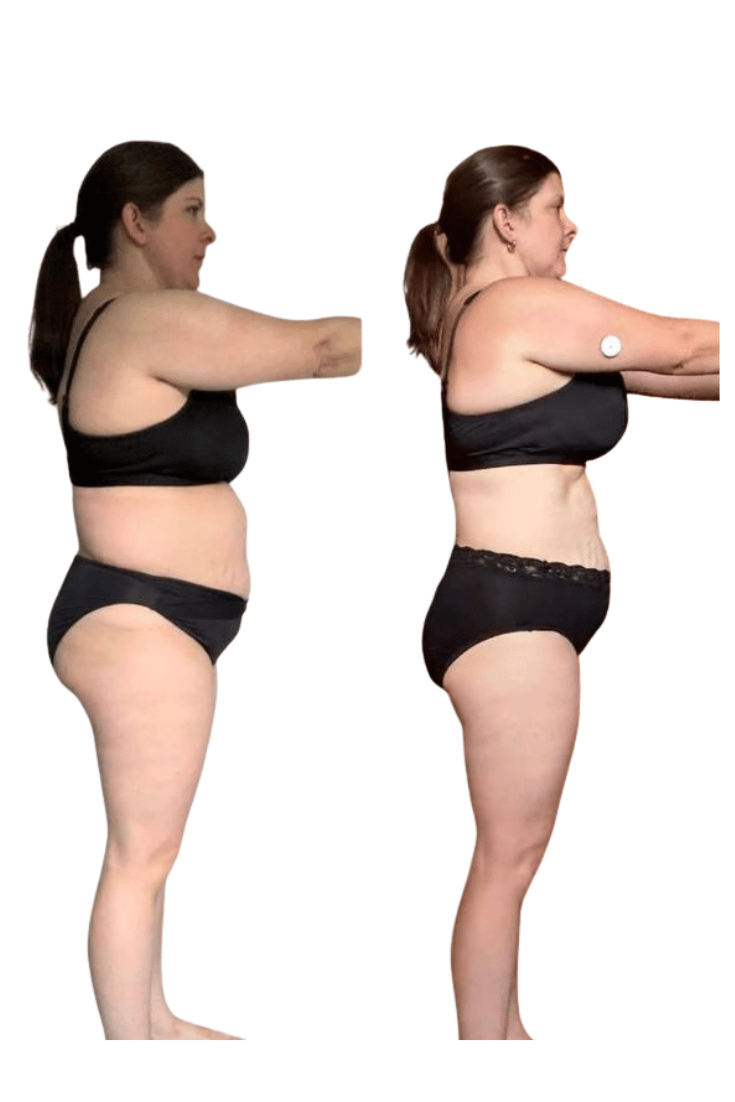
The Year I Turned 40
I turned 40 this summer, and my word for this year has been HEALTH.
Not skinny.
Not weight loss.
Not abs.
Health.
I’ve spent so much of my adult life exercising, tracking macros, meal prepping, coaching other women and doing many of the things we traditionally associate with being “healthy.”
But this year I’ve been asking a different question:
What’s actually going on inside my body?
That question led me to comprehensive blood work.
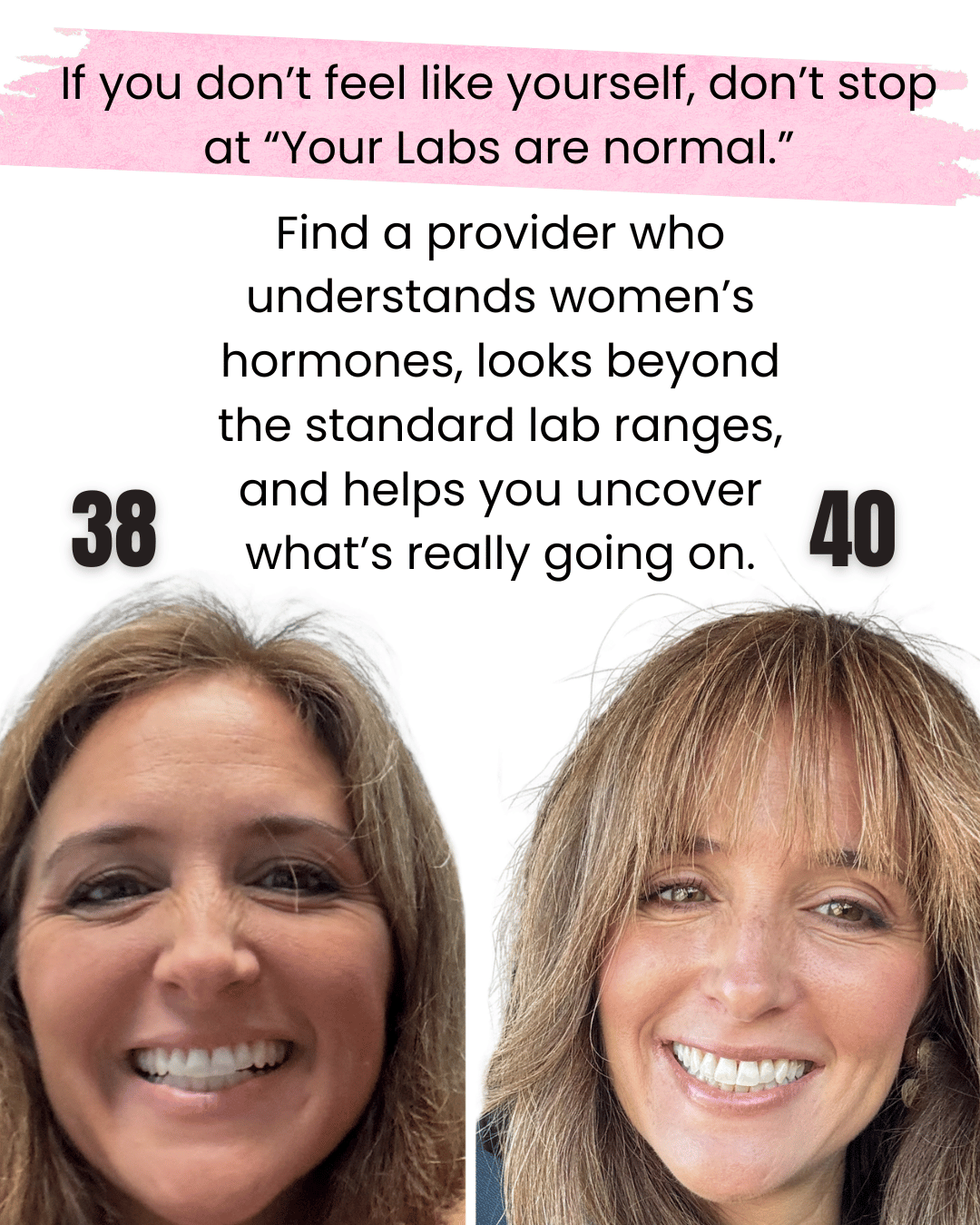
My labs revealed elevated hematocrit, which ultimately led me down the road to discovering I had sleep apnea.
My blood work also showed that my B12 was extremely low, and I now get regular B12 injections.
I’ve also started hormonal support, including progesterone.
Each piece of information has helped me understand my body a little better and make more informed decisions about my health.
So when Coach Emily started telling me everything she’d learned from wearing a CGM, my immediate thought was:
Why wouldn’t I want to know that information too?
Another Tool for the Toolbox
I think sometimes we get too caught up in arguing over which approach to fat loss is the “right” one.
Macros work.
For some people, GLP-1s work.
For some women, addressing hormonal issues through appropriate medical care can make a huge difference in how they feel and function.
Sleep matters. Strength training matters. Walking matters. Protein matters.
These things don’t have to compete with one another.
They’re tools.
And the more we understand about our bodies, the better we can determine which tools actually make sense for us.
That’s how I’m looking at wearing a CGM.
I’m not expecting it to make me lose weight.
I’m expecting it to teach me something.
Where I’m Getting My CGM
Another thing that made me curious enough to try a CGM? Compared to some of the other tools we have available for improving our health and supporting fat loss, this one feels relatively affordable and low-commitment.
I ordered mine right on Amazon.
For a relatively small investment, I get real-time feedback on how my body responds to the things I’m already doing every day—my meals, snacks, workouts, walks, sleep, hydration, stress, and all those little habits that are so easy to dismiss as insignificant.
And who knows? Maybe the data tells me I’m already doing a lot of things right. Maybe it reveals a few small changes that could make a meaningful difference. Either way, I get more information about my own body, and that’s exactly what I’m after this year.
If you want to try the same CGM I ordered, you can find it here:
Shop the CGM I ordered on Amazon
This is an affiliate link, which means I may earn a small commission if you purchase through my link at no additional cost to you.
What Coach Emily Learned From Her CGM
The thing that surprised me most during my conversation with Emily wasn’t some massive diet overhaul.
It was how SMALL many of her changes were.
Her CGM gave her immediate feedback about how her body responded to her food, movement, sleep and daily habits.
That information helped her experiment.
What happens if I do 10 squats after eating?
What happens if I go for a short walk after dinner?
What happens when I snack all afternoon versus giving my body a break between meals?
How does a savory breakfast affect me compared with a sweeter breakfast?
What happens when I’m well hydrated?
What happens after a terrible night of sleep?
These aren’t dramatic changes.
But when you can actually SEE your body’s response in real time, suddenly those tiny choices don’t feel quite so insignificant.
And that’s what I find so exciting about this.
Because the Small Things Matter
We all know we’re supposed to drink our water.
We know we’re supposed to walk.
We know sleep matters.
We know mindlessly snacking all day probably isn’t helping us.
But knowing something and actually being motivated to do it are two different things.
Give me a graph showing me exactly how my choices are affecting my body?
Now you’ve got my attention.
I think having that data readily available will be a really powerful reminder that the small things matter.
Ten squats aren’t going to transform my body overnight.
One walk isn’t going to suddenly make me lean.
Drinking enough water today isn’t going to change everything.
But those tiny decisions, repeated over and over again, add up.
And sometimes we just need something that makes those choices feel meaningful again.
I Also Just Really Love a New Challenge
There’s another reason I’m excited to try this:
I love a gadget. I love data. And I love a new challenge.
After years and years of working out and paying attention to nutrition, sometimes introducing something new is exactly what I need to become curious about my health again.
This isn’t about becoming obsessive over every glucose spike or trying to create a perfectly flat glucose line all day.
I want to use the CGM as an experiment.
Will seeing the data motivate me to walk for 10 minutes instead of sitting down after dinner?
Will it make me think twice about grabbing a random snack simply because it’s there?
I want to become a student of my own body.
What can I learn?
What patterns will I notice?
Are there meals I eat regularly that affect me differently than I expect?
Can I fine-tune my nutrition?
The Goal Isn’t More Rules. It’s More Information.
That’s probably the biggest takeaway I had from my conversation with Emily.
I’m not putting on a CGM because I need another list of foods I “can’t” eat.
I’m putting it on because I’m curious.
I want information.
And then I get to decide what I do with that information.
That’s what makes this another tool in my health—and yes, my fat-loss—toolbox.
Macro tracking gives me information.
Blood work gave me information.
Addressing my hormones gave me information.
Learning about my sleep gave me information.
And now I’m curious to see what my blood sugar can teach me.
At 40, I’m less interested in blindly following another set of rules and much more interested in understanding my own body.
So, here we go.
CGM experiment starts now.
Let’s see what I learn.