I Wore a CGM for 2 Weeks: 4 Things I Did NOT Expect to See

on Sep 12, 2026
This post may contain affiliate links. Please see our disclosure policy for more details.
I recently decided to wear a continuous glucose monitor (CGM) for two weeks, and I have to say—I am FASCINATED.
I’m not diabetic or prediabetic. I wanted to wear one because I was curious about my own glucose. I wanted to see what caused my glucose to rise, how quickly my body brought it back down, and what my overall patterns looked like throughout the day. You can read more about Why I Added a CGM to my Health Tool Box HERE.
And while I expected food to be a big part of the experiment, there were several things I definitely did NOT expect to see.
Before I get into those, though, let’s talk about why glucose matters in the first place.
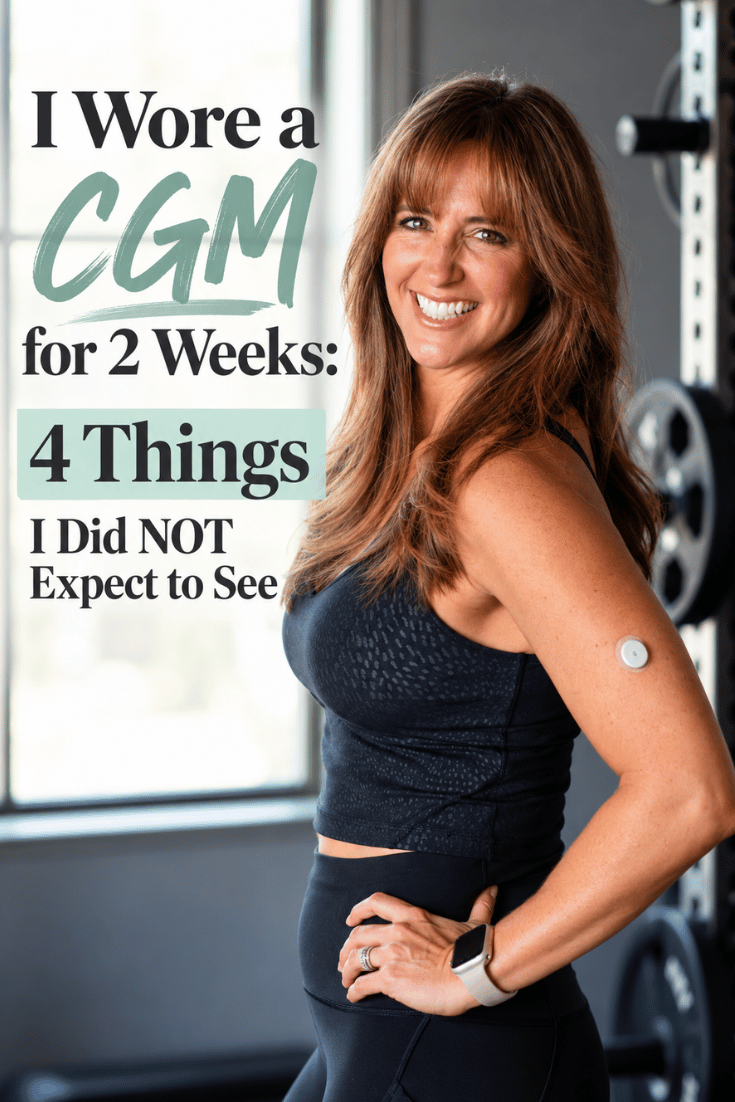
Table of Contents
- First, Are Glucose Spikes Bad?
- 4: Hoarding My Macros Came Back to Bite Me
- #3: Everyday Movement Mattered WAY More Than I Expected
- 2: I Could Actually SEE the Effects of Grazing
- #1: My Biggest Glucose Spike Surprise Had NOTHING to Do With Food
- But My BIGGEST Takeaway From Wearing a CGM…
- Would I Wear a CGM Again?
First, Are Glucose Spikes Bad?
A glucose spike isn’t automatically a bad thing. Your blood glucose is supposed to rise after you eat, especially after eating carbohydrates. It also rises when you exercise. That’s normal.
When glucose rises, your pancreas releases insulin. Insulin helps move glucose out of your bloodstream and into your cells, where it can be used for energy or stored for later.
What we don’t want is glucose making large, prolonged excursions over and over again. Over time, frequently requiring high amounts of insulin can contribute to insulin resistance, meaning your cells don’t respond to insulin as effectively and your body has to work harder to keep blood glucose under control.
So my goal with wearing a CGM was never to keep my glucose perfectly flat or eliminate carbohydrates.
I wanted to see what made my glucose rise, how my body responded when it did, and what the bigger picture looked like.
And that’s where things got interesting.
4: Hoarding My Macros Came Back to Bite Me
If you count macros, you’ve probably had one of these days.
I get busy working, spend way too much time sitting at my computer, accidentally skip lunch and suddenly realize it’s late afternoon and I still have a TON of macros left.
Normally I might think, No big deal. I’ll just eat them later.
My CGM gave me a different perspective.
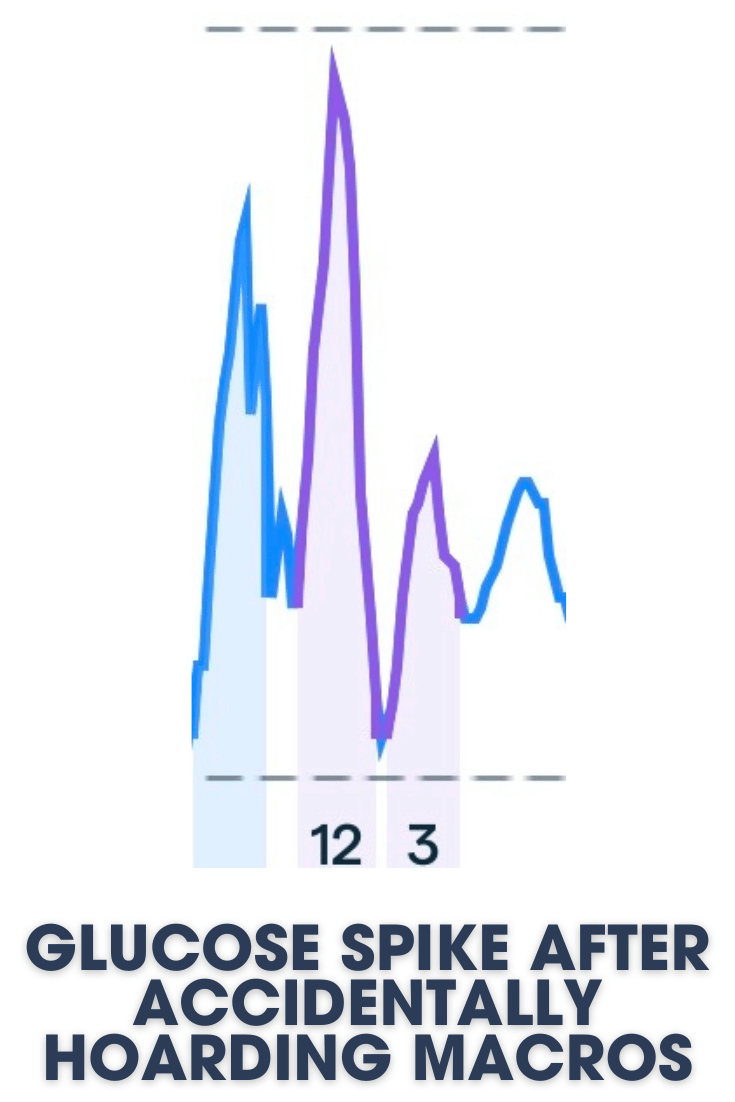
On days when I ate more consistently throughout the day, my glucose response tended to be steadier. When I waited and crammed a much larger amount of food into the end of my day, I saw a noticeably bigger glucose response.
That doesn’t mean eating a big dinner is “bad.” But it did make me rethink my habit of accidentally hoarding my macros.
My takeaway: Just because I can technically fit all of my macros into the end of the day doesn’t necessarily mean that’s the pattern that works best for my body.
#3: Everyday Movement Mattered WAY More Than I Expected
This may have been the most actionable thing I learned.
I already exercise regularly, so obviously I know movement is good for me. But I didn’t realize how much the little bits of movement throughout my day could show up on my glucose graph.
Walking after a meal. Doing chores around the house. Taking the stairs. Parking farther away. Spending less time sitting at my desk.
It all counts.
My glucose tended to be steadier on days when I was consistently moving compared with days when I spent long stretches sitting.
And one of the simplest things I could do after eating?
Walk.
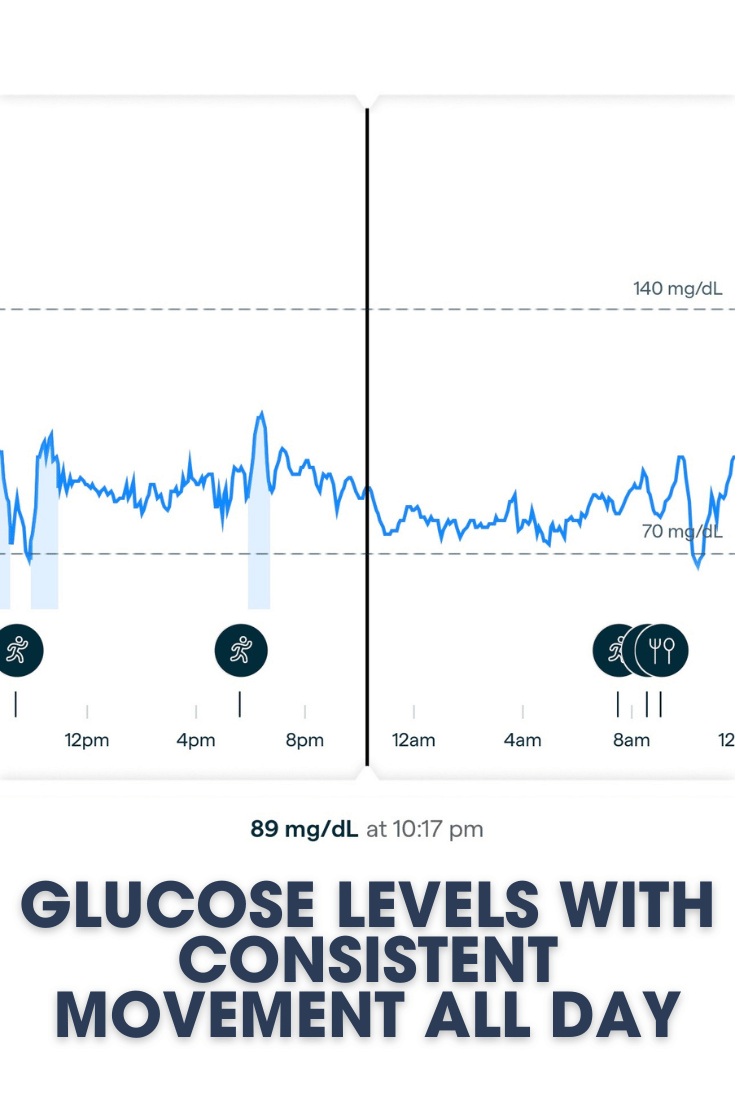
Doing a hard workout helped, but getting up and moving after a meal seemed to also make a significant difference in my individual CGM patterns.
That was a huge reminder that exercise doesn’t only “count” when I’m in the gym.
My takeaway: MOVE. Especially after meals. Those little pockets of activity throughout the day matter more than I realized.
2: I Could Actually SEE the Effects of Grazing
This one was almost comical when I looked at the graph.
One evening I hosted a mahjong party. We had chips, dips and appetizers. Then we had a big meal. Then about 45 minutes later, we had dessert.
And I basically sat through all of it. Eat. Sit. Eat. Sit. Eat. Sit.
When I looked back at my CGM data afterward, I could see it:
Spike. Spike. Spike.
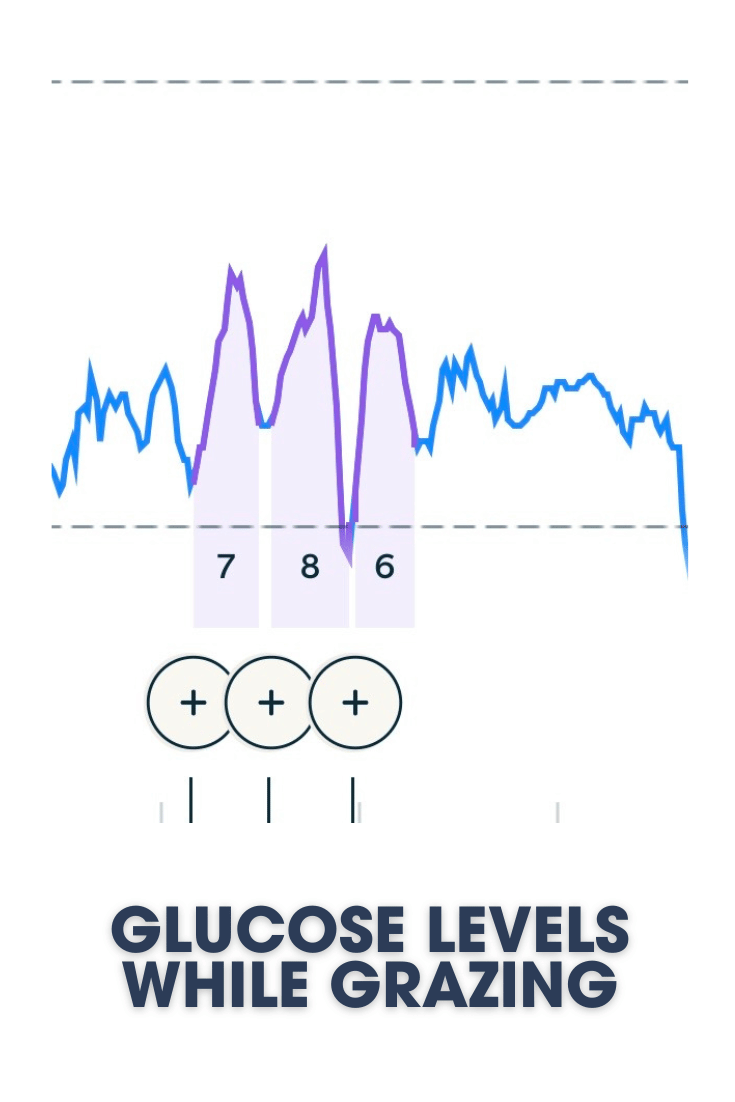
Three bumps almost back-to-back.
The interesting part wasn’t that one particular food was “bad.” It was seeing what happened when I continued adding more food without much time—or movement—in between.
Compare that with meals where I ate, got up, cleaned the kitchen, walked around or went for a short walk, and my graph could look completely different.
My takeaway: It wasn’t just what I ate that mattered. The pattern of eating, timing and movement mattered too.
#1: My Biggest Glucose Spike Surprise Had NOTHING to Do With Food
THIS ONE BLEW MY MIND.
I was at my son football game, and let’s just say it was stressful. I had one kid get injured the week before and I sat there a ball of nervous as the game continued on.
At some point I checked my CGM and noticed my glucose had gone up.
I hadn’t just eaten a big meal.
I wasn’t exercising.
I was sitting at a football game stressing out!
And yet, there it was on my graph.
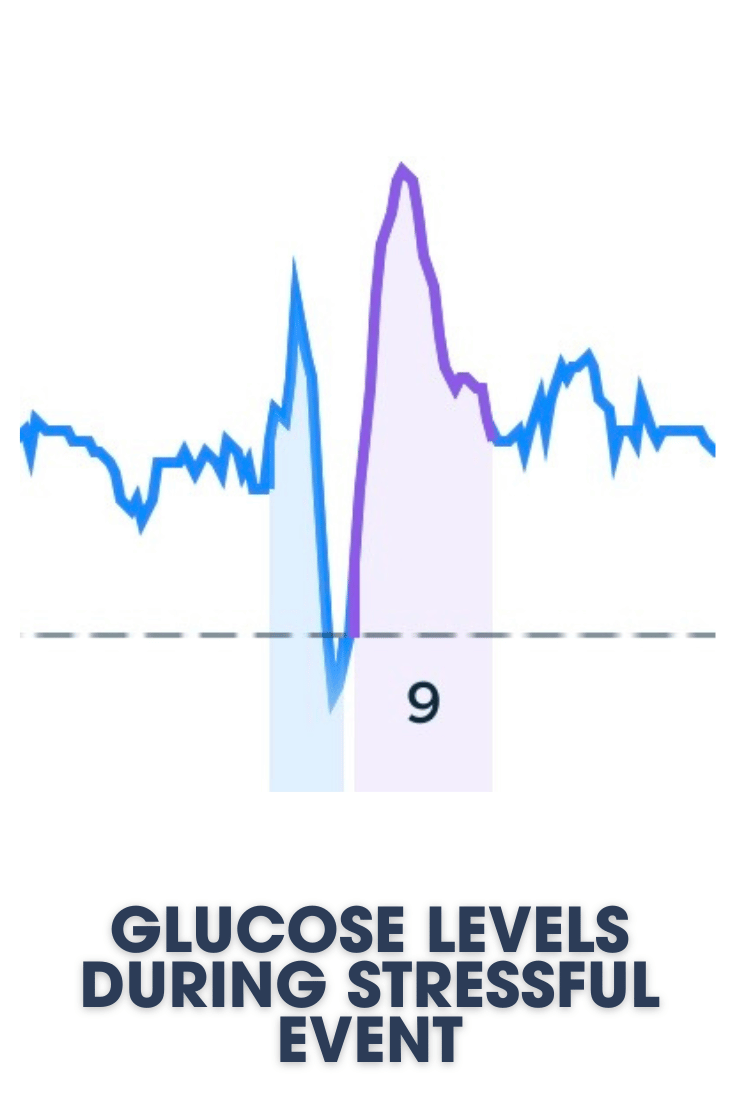
Stress can trigger the release of hormones such as adrenaline and cortisol. Part of the body’s stress response is making more glucose available in the bloodstream so you have readily available energy to deal with whatever threat your body thinks it’s facing.
Apparently my body thought Milo’s football game required emergency fuel.
Obviously, one stressful football game isn’t something I’m worried about. But being able to actually SEE a physiological stress response happening in real time was fascinating.
It was also a reminder that blood glucose isn’t just about food.
My takeaway: Sleep, stress, exercise, movement, meal timing and food can all be pieces of the puzzle.
But My BIGGEST Takeaway From Wearing a CGM…
After two weeks of zooming in on individual spikes, dips, meals, workouts and stressful football games, I finally zoomed OUT.
And this was probably the most reassuring finding of the entire experiment:
My glucose is remarkably stable.
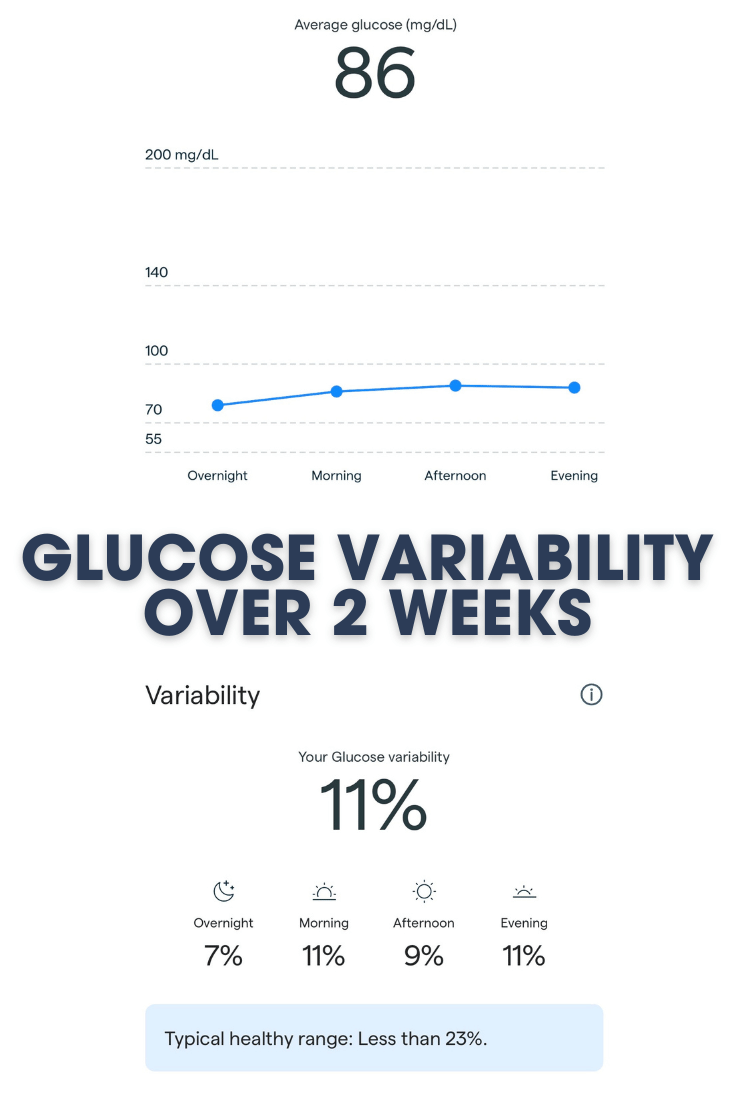
The CGM I’m using is Lingo, and according to Lingo, less than 23% glucose variability is typically considered a healthy range.
Mine?
11% variability.
That means my glucose wasn’t spending the day making huge excursions up and down. Overall, it was staying pretty consistent throughout different parts of my day.
And I think that’s one of the most important things I learned from this experiment.
It’s really easy when you’re wearing a CGM to stare at one spike and think, WHAT DID I DO?!
But one isolated glucose response doesn’t tell the entire story.
I became much more interested in the pattern.
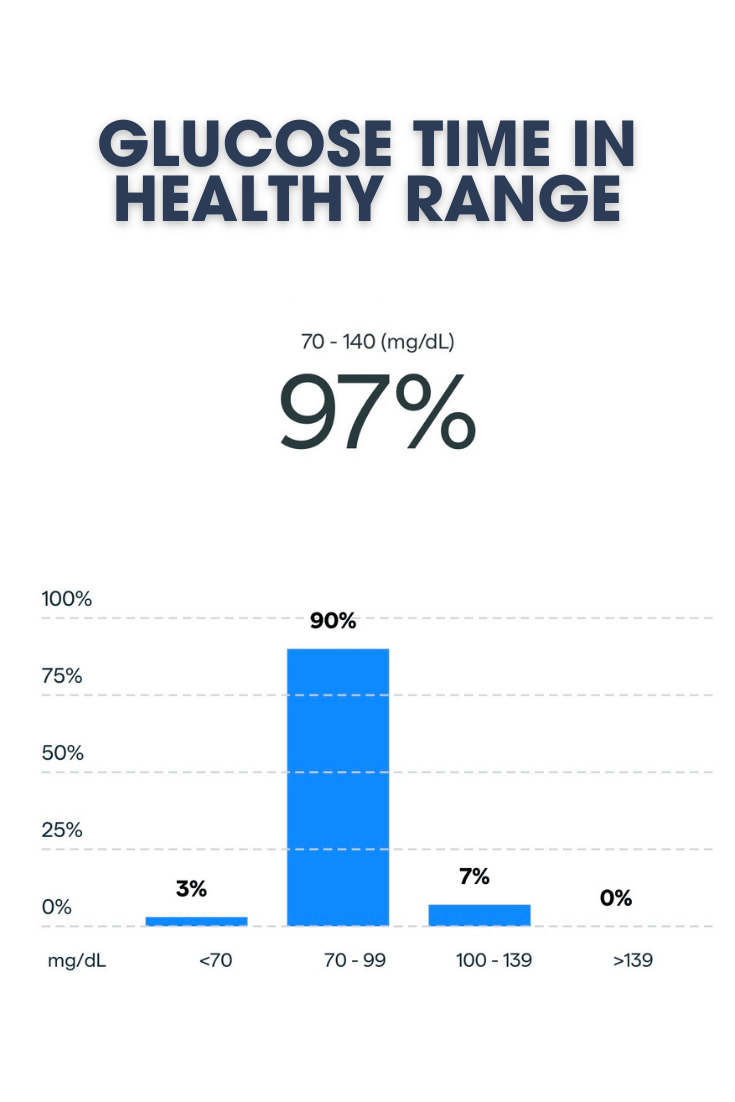
How high did my glucose go? How long did it stay elevated? Did it come back down? What was happening beforehand? Had I eaten? Exercised? Been sitting all day? Was I stressed? And what did my glucose look like over the course of the entire day and week?
The CGM didn’t make me afraid of glucose spikes or carbohydrates.
If anything, it made me appreciate how dynamic our bodies are.
Food matters. Movement matters. Meal timing matters. Stress matters. And the overall pattern matters more than one isolated number.
Would I Wear a CGM Again?
Absolutely.
I didn’t start this experiment because I thought something was wrong with my glucose. I did it because I wanted another tool to learn more about my health and my own body.
And that’s exactly what it became—a tool.
It gave me immediate feedback on some habits I already knew were beneficial and showed me a few connections I hadn’t expected at all.
My biggest practical changes going forward are actually pretty simple: eat more consistently instead of accidentally saving half my food for nighttime, move more throughout the day, and get up and walk after meals when I can.
Nothing extreme. No fear of carbs. No chasing a perfectly flat glucose line.
Just more information I can use to make better decisions for my health.
Shop the CGM I ordered on Amazon
This post shares my personal experience and CGM data for educational purposes and isn’t medical advice. CGM readings can also differ from blood glucose measurements, so talk with your healthcare provider about your own glucose levels or any readings that concern you.