Understanding Your Food Triggers: The Secret to More Successful Days

on Dec 01, 2025
This post may contain affiliate links. Please see our disclosure policy for more details.
If you’ve ever found yourself standing over a beautiful charcuterie board thinking, “Just one more slice of cheese,” only to realize you’ve eaten half the board—trust me, you’re not alone.
Food triggers are real. And while nothing is inherently “bad” or “off-limits” in a macro-balanced lifestyle, it’s incredibly important to recognize what personally leads you away from your goals—and what nudges you closer to them.

What Are Triggers?
When I talk about triggers, I’m referring to the environments, habits, or emotions that spark a chain reaction.
Some triggers push you away from your goals (like that charcuterie board that turns into a Prosecco party). Others pull you closer to them (like the simple act of making your bed in the morning).
“Bad” Triggers – The Ones That Derail You
These are the foods, situations, or even mindsets that tend to send you off course.
For me, charcuterie boards are a prime example. They’re fun, festive, and full of all my favorite things. But if I’m being honest, I lose all sense of self-control in front of them. One cracker turns into twenty, and before I know it, I’m sipping bubbly and thinking, “Well, today’s a wash.”
It’s not that cheese or wine are “bad.” They fit perfectly fine in a macro-balanced diet. But I’ve learned that certain foods or settings trigger an all-or-nothing mindset for me.
That’s the power of self-awareness—knowing your limits, not to punish yourself, but to protect your progress.
“Good” Triggers – The Ones That Propel You Forward
Healthy triggers are just as real, and they deserve just as much attention. These are the small, intentional actions that make the next right choice a little easier.
- When I make my bed in the morning, I’m less likely to climb back in and scroll my phone for 20 minutes.
- When I get my workout in early, I naturally want to fuel my body better throughout the day.
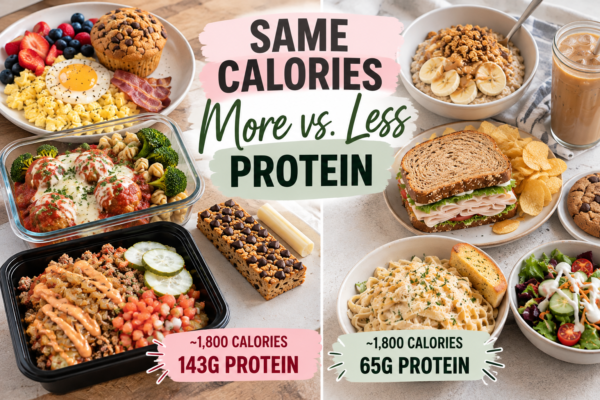
- When I hit my goal of 45 grams of protein before lunch, I tend to have more energy and fewer cravings in the afternoon.
These little actions have a domino effect. One good decision leads to another.
How to Identify Your Triggers
This is where the real work—and growth—happens. Start by reflecting on both ends of the spectrum:
- When your day unravels, look backward.
Ask yourself, “What triggered me today?” Maybe it was skipping breakfast. Maybe it was having that candy bowl at arm’s reach. Maybe it was walking into the kitchen after a stressful day without a plan for dinner. - When your day feels successful, look backward again.
Ask yourself, “What worked today?” Maybe you hit your protein goal early, prepped your lunch the night before, or took 10 minutes to pray or journal before the chaos of the day started.
The Beauty of Macro Awareness
Awareness is everything. The more you connect your behaviors with outcomes, the easier it becomes to recreate success and avoid setbacks.
One of my favorite things about counting macros is that nothing is off-limits. You can eat cheese, chocolate, bread, and even charcuterie boards if you can enjoy them in moderation.
But—and this is important—self-awareness might reveal that some foods are better left for special occasions. Not because they’re “bad,” but because you know they can easily spiral into choices that don’t serve you.
Freedom comes from understanding yourself. The more you know your triggers, the more control you gain over your decisions—and that’s where lasting results happen.
Your Action Step
Take five minutes tonight to reflect on these two questions:
- What situations or foods tend to derail me from my goals?
- What small habits or routines help me stay consistent?
Write them down. Look for patterns. Then, start intentionally creating more of the good triggers and removing (or preparing for) the bad ones.
Because the goal isn’t perfection—it’s awareness. And awareness is what leads to consistency.