How I Healed My Plantar Fasciitis After a Year of Pain

on Jul 14, 2025
This post may contain affiliate links. Please see our disclosure policy for more details.
If you’ve ever dealt with that sharp, nagging pain in your heel or the bottom of your foot—especially first thing in the morning—you might be all too familiar with plantar fasciitis. I battled it for over a year and tried so many things to get relief. There is nothing more frustrating than a nagging injury for an athlete. Today, I want to share what finally worked for me in hopes it will help you get back on your feet, pain-free.
What Is Plantar Fasciitis?
Plantar fasciitis is inflammation of the plantar fascia, the thick band of tissue that runs along the bottom of your foot, connecting your heel to your toes. It’s one of the most common causes of heel pain and often affects runners, people who are on their feet a lot, or those who wear unsupportive footwear.
It usually starts as a dull ache and can become a sharp, stabbing pain—especially with your first few steps in the morning or after periods of rest.
Who’s at Risk?
While anyone can develop plantar fasciitis, certain groups are more prone:
- Women in perimenopause or menopause (hormonal changes can impact connective tissue)
- People who overpronate (your foot rolls inward when walking)
- Those with tight calves or Achilles tendons
- People who are on their feet all day
- Athletes, especially runners or CrossFitters
For me, the perfect storm was likely a combination of shoe choice, overuse, and the physical demands of daily life with six kids.
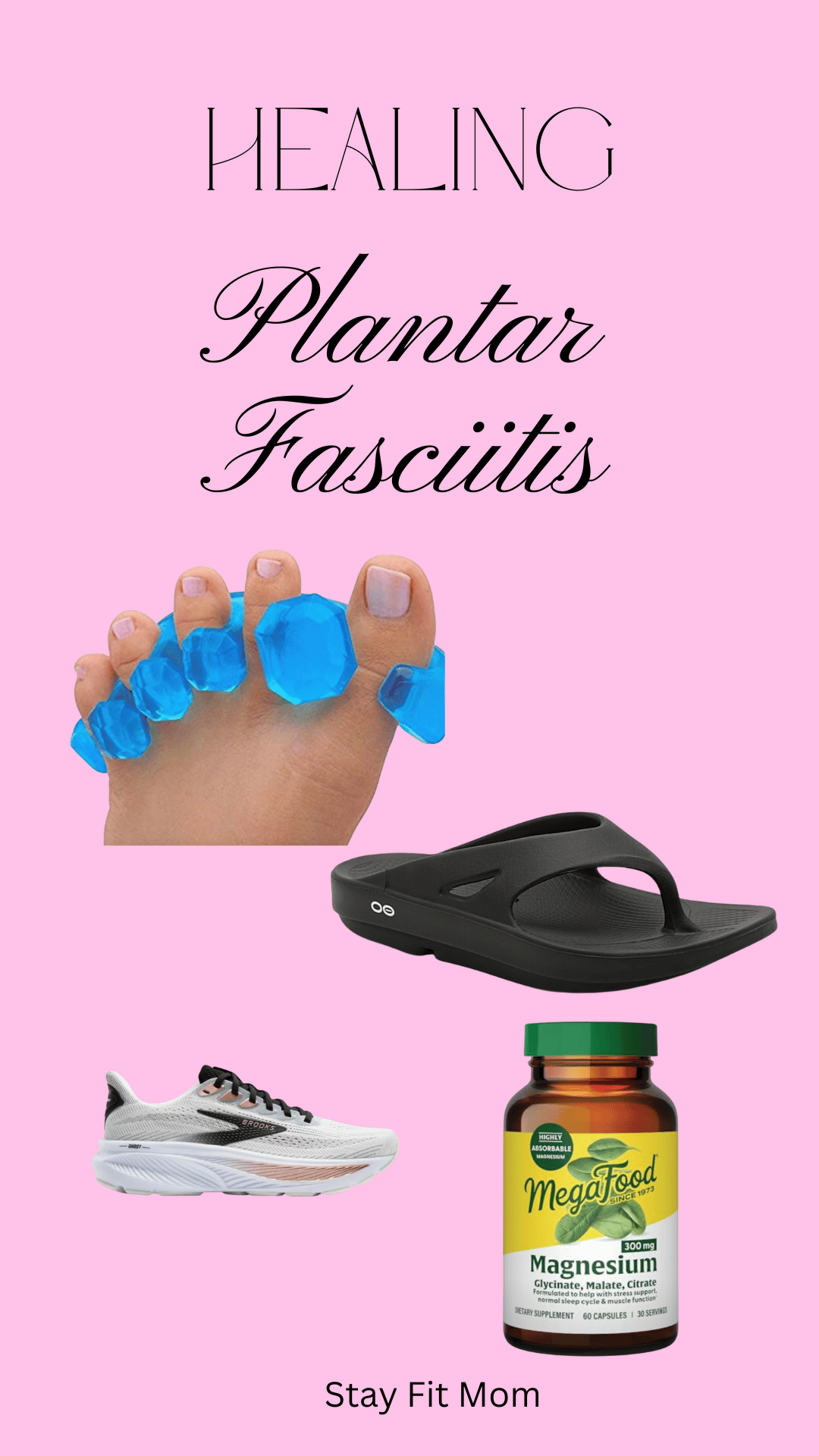
What Actually Helped Me Heal: My Best-of List
1. Toe Separators (Amazon) – GAME CHANGER
I wish I had tried these first. I never realized how tight and scrunched my toes had become—and how much that impacted the muscles in the lower part of my foot. Using toe separators daily helped open up the toes and improve mobility, which released a lot of tension and allowed my foot to heal.
💡 Tip: Start slowly—just 10–15 minutes a day while watching TV or working at your desk.
These are hands-down the best sandals I’ve ever worn. I use them daily, whether I’m doing dishes, walking around the house, or taking long city walks. I even walked 30,000 steps in Nashville wearing them—and had zero foot pain at the end of the day.
3. Running Store Gait Analysis
I went to a local running store where they analyzed my gait and confirmed I was overpronating. They recommended SOLE inserts, which provided immediate relief by supporting the arch and stabilizing my stride.
4. Switching Shoes
I swapped out my Nike Metcons (which are great for lifting but not ideal for foot issues) for Brooks Ghosts—a much better choice for overall support and cushion, especially during workouts that involve jumping or running.
Other Helpful Strategies
Taping Techniques: Look up kinesiology taping methods specifically for plantar fasciitis on YouTube.
Stretching & Mobility Work: Stretch your calves and feet daily. Try rolling your foot over a frozen water bottle or lacrosse ball.
Massage Guns or Manual Massage: A little daily self-care goes a long way.
Night Splints: These keep your foot flexed while you sleep and can help if morning pain is your biggest issue.
Compression Socks: Great for reducing inflammation and giving support on active days.
Supplements That May Help
While they’re not a magic fix, these supplements may support connective tissue healing:
- Magnesium – Helps relax tight muscles and reduce inflammation.
- Collagen – Supports joint and ligament health.
- Vitamin C + Zinc – Promotes tissue repair and healing.
Workout Movement Modifications
If you’re plantar fasciitis is limiting your normal exercise routine here are a few movement options for you to stay active even with this limiting injury.
Swap Running, Jumping for…
- Biking
- Rowing
- Swimming
Focus on Upper Body and Core work including…
- Seated dumbbell shoulder press
- Bicep curls, tricep extensions
- Bench or floor chest press
- Lat pulldowns or seated rows
- Bird dogs (hands and knees, low foot involvement)
- Dead bugs
- Russian twists (keep heels lightly rested if needed)
Don’t forget Mobility and Recovery to help your plantar Fasciitis:
- Gentle calf and hamstring stretches (especially before bed)
- Toe stretches and towel pulls
- Foam rolling the calves, hamstrings, and glutes
Final Thoughts
Plantar fasciitis is one of those conditions that demands patience—but healing is absolutely possible. For me, it wasn’t just one thing but the combination of tools and time. I still use many of these tools proactively, especially the toe separators and OOFOS sandals.
If you’re in the thick of it right now, don’t give up. Try a few of these strategies, stay consistent, and know that relief is on the horizon.